[esborrany] pendent discografia, estil, i playlist
asd
Thelonious Sphere Monk[3] (/θəˈloʊniəs/ October 10, 1917 – February 17, 1982) was an American jazz pianist and composer. He had a unique improvisational style and made numerous contributions to the standard jazz repertoire, including “‘Round Midnight”, “Blue Monk”, “Straight, No Chaser”, “Ruby, My Dear”, “In Walked Bud”, and “Well, You Needn’t”. Monk is the second-most-recorded jazz composer after Duke Ellington.[4]
Monk’s compositions and improvisations feature dissonances and angular melodic twists, often using flat ninths, flat fifths, unexpected chromatic notes together, low bass notes and stride, and fast whole tone runs, combining a highly percussive attack with abrupt, dramatic use of switched key releases, silences, and hesitations. “As a leading figure in the rhythm section of modern jazz, Thelonious Monk serves as a model for accompaniament improvisation.”[5]
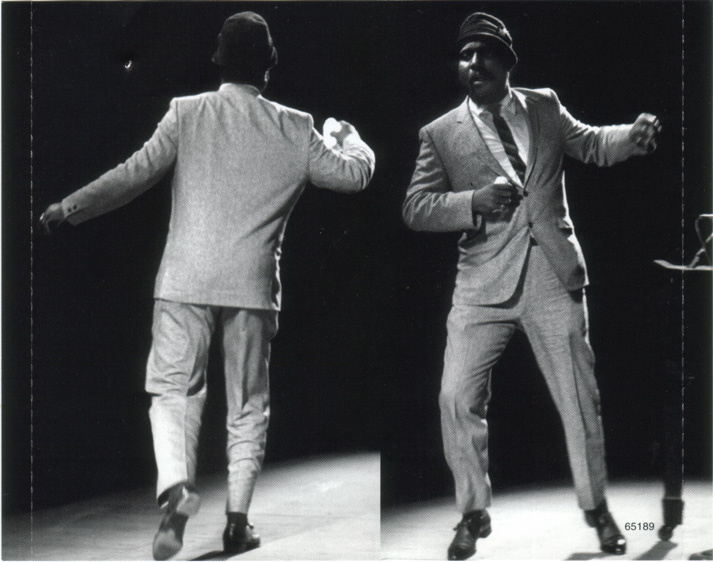
Monk’s distinct look included suits, hats, and sunglasses. He also had an idiosyncratic habit during performances: while other musicians continued playing, Monk would stop, stand up, and dance for a few moments before returning to the piano.
[WK]
Nascut a Rocky Mount, North Carolina. Fa família es trasllada a NYC. Va estudiar breument la trompeta però es passa al piano rebent classes de la seva veïna Alberta Simmons que li ensenyà l’estil stride de Fats Waller, James P. Johnson i Eubie Blake. Alguna vegada acompanyava la seva mare quan cantava himnes a l’església. Durant dos anys va estudiar amb Simon Wolf, un pianista austríac amb qui va conèixer Bach, Beethoven, Mozart, Liszt, Chopin i Rachmaninoff.
1933-1946
Amb 16 anys comença a guanyar algun diner amb una banda. Al primers dels ’40 era el pianista de Minton’s, a l’època que s’estava forjant el bebop.
Anava a ser reclutat per la WWII però va ser rebutjat per raons psiquiàtriques.[quines?]
1947-1952
El presenten a Lorraine Gordon, propitària del Village Vanguard, que reconeixerà el seu geni. Els seus discos no e svenen, no obstant Lion told him that there were three people in his life that when he heard them, he just flipped and had to record everything they did. The first was Monk, the second was Herbie Nichols, and the third was Andrew Hill, where he didn’t care how much money he made or lost. He just had to record this music
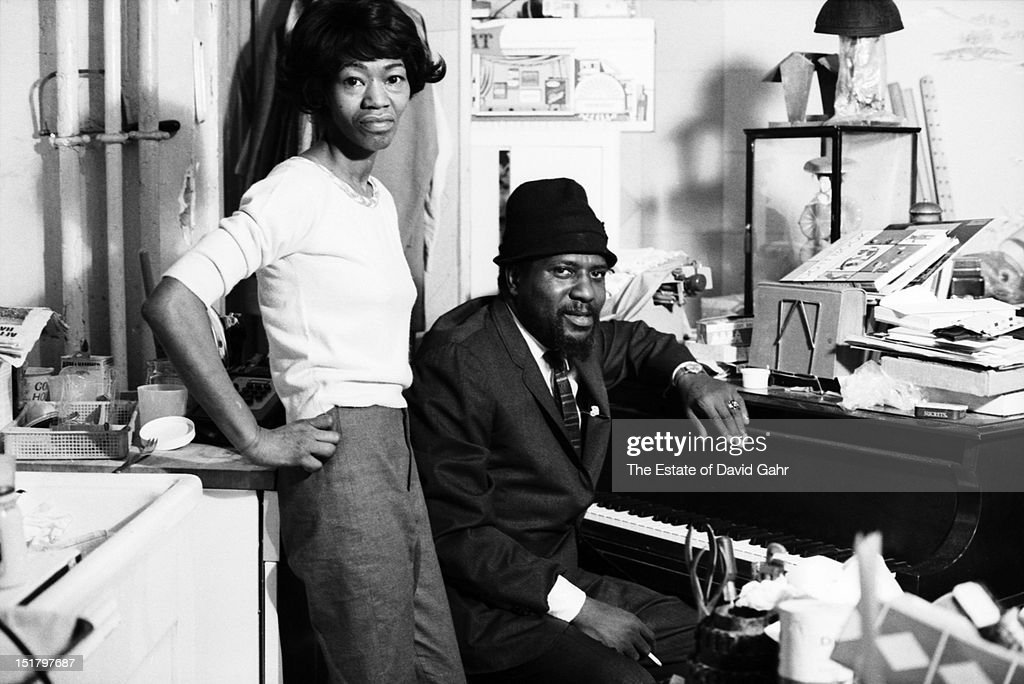
El 1947 es casa amb Nellie Smith. [Crepuscule with Nellie]
El 1951 estava a un cotxe amb el seu amic Bud Powell i els van trobar droga. Monk no va tetsificar contra Powell i li van retirar la seva “New York City cabaret Card”, cosa que l’impedia tocar a clubs. Va sobreviure com va poder en clubs de Brooklyn propietat de negres.
1952-1954 Prestige Records
Enregistra amb Prestige alguns àlbums que tindran poc èxit. El 1954 fa el primer viatge a Paris. Backstage, Mary Lou Williams introduced him to Baroness Pannonica “Nica” de Koenigswarter, a member of the Rothschild family and a patroness of several New York City jazz musicians. She was a close friend for the rest of Monk’s life: she “served as a surrogate wife right alongside Monk’s equally devoted actual wife, Nellie”[20] and “paid Monk’s bills, dragged him to an endless array of doctors, put him and his family up in her own home and, when necessary, helped Nellie institutionalize him. In 1958, Monk and the baroness were stopped by the police in Delaware. When a small amount of marijuana was discovered, she took the rap for her friend and even served a few nights in jail.
1955-1961 Riverside Records
Poques vendes però prestigi entre els crítics. El segell Riverside compra el contracte per 108$.
Thelonious Monk Plays Duke Ellington (1955)
Unique Thelonious Monk (1956)
Brilliant Corners (1956)
Recupera la Cabaret Card i toca amb Coltrane al Five Spot. Després ho farà amb Griffin i Charlie Rouse al saxo, Ahmed Abdul-Malilk i Roy Haynes.
“Crepuscule with Nellie”, recorded in 1957, was referred to by biographer Robin D. G. Kelley as Monk’s “only through-composed composition, meaning that there is no improvising. It is Monk’s concerto, if you will, and in some ways it speaks for itself. But he wrote it very, very carefully and very deliberately and really struggled to make it sound the way it sounds. … it was his love song for Nellie”.
1962-1970 Columbia Records
grup amb Charlie Rouse ts, John Ore bs Frankie Dunlop ds.
Estudi
Monk’s Dream, 1963
Criss Cross, 1963
El 1964 apareix a la portada de Time.
Underground, 1968. But by the Columbia years his compositional output was limited, and only his final Columbia studio record, Underground, featured a substantial number of new tunes, including his only 3
4 time piece, “Ugly Beauty”.
en viu
Miles and Monk at Newport (1963)
Live at the It Club (1963)
Live at the Jazz Workshop (1964)
1971-1982 Anys finals
Té problemes de salut [mental?].
Fa un tour amb els Giants of Jazz, a group which included Gillespie, Kai Winding, Sonny Stitt, Al McKibbon, and Art Blakey.
Bassist McKibbon, who had known Monk for over twenty years and played on his final tour in 1971, later said: “On that tour, Monk said about two words. I mean literally maybe two words. He didn’t say ‘Good morning,’ ‘Goodnight,’ ‘What time?’ Nothing. Why, I don’t know. He sent word back after the tour was over that the reason he couldn’t communicate or play was that Art Blakey and I were so ugly.
Però en canvi, abans, Coltrane havia d’ell: “Monk is exactly the opposite of Miles [Davis]: he talks about music all the time, and he wants so much for you to understand that if, by chance, you ask him something, he’ll spend hours if necessary to explain it to you.
The documentary film Thelonious Monk: Straight, No Chaser (1988) attributed Monk’s quirky behavior to mental illness. In the film, Monk’s son said that his father sometimes did not recognize him, and he reported that Monk was hospitalized on several occasions owing to an unspecified mental illness that worsened in the late 1960s. No reports or diagnoses were ever publicized, but Monk would often become excited for two or three days, then pace for days after that, after which he would withdraw and stop speaking. Doctors recommended electroconvulsive therapy as a treatment option for Monk’s illness, but his family would not allow it; antipsychotics and lithium were prescribed instead.[30][31] Other theories abound: Leslie Gourse, author of the book Straight, No Chaser: The Life and Genius of Thelonious Monk (1997), reported that at least one of Monk’s psychiatrists failed to find evidence of manic depression (bipolar disorder) or schizophrenia. Another doctor maintains that Monk was misdiagnosed and prescribed drugs during his hospital stay that may have caused brain damage.
Va viure els seus darrers 6 anys a Weekhaven la residència de Pannonica, atès per ella i per la seva dona Nellie.